
The New New Internet Conference: Ted, Tim and the pursuit of happiness

Thursday, November 1st, 2007 by Brian Lustig | 5 Comments

Organizing a full-day conference is not an easy task under any circumstances. Though one could argue the lift is a little lighter if the Conference topic is easily defined and understood. A Conference on developments in the paper clip industry for instance: still a pain to organize but not hard to agree on a central theme.

Web 2.0 on the other hand….

Where do you begin? How do you bring together thought leaders developing everything from mashup applications to a Second Life presence for government agencies, foster provocative discussions while maintaining a central theme that carries throughout?

Over the next few days I’ll be posting on the discussions that took place at The ExecutiveBiz “The New New Internet” Conference today, and the speakers who sought to fit together all of the Web 2.0 pieces into one puzzle. With over 800 attendees from the public and private sector - executives, managers and thought leaders who will have a huge say in how Web 2.0 evolves in the coming years - circulating, absorbing and networking, there was an undeniable buzz working its way through the hotel (and I’m not just talking about the hundreds of Blackberries set on vibrate).

For those who attended, feel free to post comments on your takeaways from the sessions and speakers, and what you took away from all of the insight gleaned. And for those who could not attend consider this blog a Cliffs Notes version. Also, be sure to keep checking the ExecutiveBiz site for full video and photos of the presentations and panel discussions.

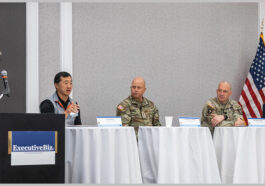
Today’s entry will focus on two keynotes: the Conference kickoff presentation from Ted Leonsis, Vice Chairman Emeritus, AOL and the lunch presentation from Tim Ferriss, bestselling author of The 4-Hour Work Week.images.jpg

I’m starting with these two because they both addressed overlapping themes that hold relevance for every nook and cranny of the Web 2.0 space. They both spoke of how, for all the technological developments and new gadgets, the lives of consumers are not more productive. For Ted, a self-professed student of happiness, this is a problem. Web 2.0 holds the power to enhance his five key ingredients of happiness (relationships, community, self expression, giving back and pursuit of a higher cause), but only if companies providing Web 2.0 services stay focused on the consumer. Ferriss’ lunch keynote took a different approach to in some ways hammer home the same point: individuals are letting devices, clients and relationships control them, rather than vice-versa. The result, he warns, is that no matter how much money we make or clients we win, our happiness level decreases because our control over life has decreased.

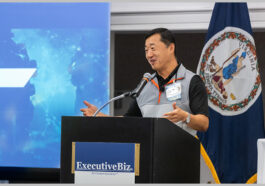
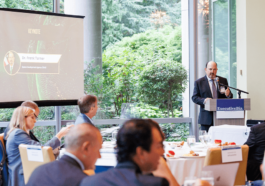
kleonsis.jpgThough introducing himself as “the New New Ted Leonsis” it was in fact vintage Ted - separating what is cool and flashy about Web 2.0 from what is required for companies to create a viable business model on it. The social networks, video sites and user reviews might be getting all of the attention, but Leonsis reminded the audience that consumer collaboration is not 2.0. It isn’t even 1.0 but instead pre-Web 1.0.

For Ted - from his time at AOL to his role with the Washington Capitals - it has always been about the consumer. It is about the consumer who no longer is content to sit on a couch and be told what programming he can watch at a particular time. The consumer wants choice and control. For television that plays out through TiVo, and now that we live on the Internet it is about control over content, expression, applications and the overall Web experience.

Though enthusiastic and optimistic, Ted is concerned by how Web 2.0 companies are laying out revenue streams. While a successful company should tap multiple revenue streams, Leonsis argues most Web 2.0 companies lack even a single viable revenue stream and instead are content to piggyback on Google’s. For Web 2.0 to take hold as a business model this will have to change, or risk having the entire category beholden to a small handful of Web behemoths like Google, FaceBook, MySpace, etc.

Leonsis concluded by addressing the demographic realities that Web 2.0 companies must heed in order to find an audience. While the country is growing more diverse ethnically, he points out that most of the people pulling the Web 2.0 strings are predominantly white and male (a fact he confirmed by asking attendees to survey the audience). I can attest to the heavy male factor, as female attendees rejoiced that finally, at long last, the line for the men’s restroom exceeded their own.

It was really the ideal opening speech, because it armed attendees with some big ideas and considerations as everyone headed off into micro-sessions where Web 2.0 - as a business within the public and private sector - would be discussed in more detail.

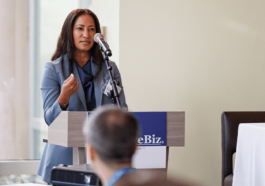
scott-beale-laughing-squid-ignite.jpgFerriss picked up on the happiness theme by crystallizing how beholden we are as businesspeople to the technologies that supposedly make our lives easier. The concept of his book is really about how to redesign our lifestyle in a way that maximizes happiness while maintaining work and life productivity. As listeners sliced into chicken breasts and registered both written and mental notes, Ferriss sliced through complex work and life issues by placing them into simplified buckets with tangible solutions.

Our work and personal lives are filled with an endless stream of tasks we feel the need to accomplish. The problem, as Ferriss tells it, is that we often pat ourselves on the back for multi-tasking. In truth, we should be single-tasking: picking out the small number of tasks critical to our work and personal lives and focusing exclusively on them until project completion, then outsourcing the trivial tasks that occupy so much of our day.

Scanning the audience you had the sense that few people could imagine making room in their lives for more work, more family obligations, more social requirements. And that is the problem as Ferriss sees it: our lives are not scalable. By focusing on critical tasks and outsourcing trivial tasks we can make our lives scalable and regain control of our lives.

Both speakers took aim at how we - as consumers and workers - interact with Web 2.0, technology and gadgets. Beyond all of the applications, Web sites and tools, it is really about finding ways to increase happiness and control for consumers. For Leonsis, Web 2.0 businesses are still working through ways to utilize the Internet for this purpose, and for Ferriss the consumer still hasn’t quite figured out the formula for making their own lives easier.

What both men agreed on is the tremendous power Web 2.0 - when executed properly - can place in the hands of consumers, and in subsequent posts I’ll dive a little deeper into the Conference sessions that demonstrated how that potential is already starting to play out.

Brian Lustig is co-founder of Lustig Communications, a Rockville, MD-based communications firm that works with growing technology and government IT firms. Lustig is also a contributor to local business and industry publications.

East Meets West - A Web 2.0 Summit Recap

Monday, October 22nd, 2007 by John Stauffer | 1 Comment

Last week, San Francisco hosted the fourth annual Web 2.0 Summit. The event wrapped up on Friday and with over 100 featured speakers, from Tim O’Reilly to ebay CEO Meg Whitman, there was a lot of related news coverage. For a full report on what’s become a yearly west coast tradition, visit the news and coverage section on the event website.

Microsoft CEO Steve Ballmer made waves when he announced that Microsoft plans to purchase 20 web companies a year for the next five years, pledging to spend between $50 million and $1 billion on each of the prospective companies.

“Those will be good acquisitions, and they’re important to us,” Ballmer said. “And they’re of strategic importance.”

Open source developers may also be on the table, according to Ballmer. “We will buy smaller companies. We will buy smaller companies that make some use of open source software,” he said, according to CNET. “We don’t want to discourage people who would talk with us just because they do some open source.” Ballmer even went so far as to offered his email address for any interested developers looking to sell.

Here’s a clip of the Ballmer interview from the Web 2.0 Summit:

Ted Leonsis and Om Malik, featured speakers at the summit, will also be at the New New Internet’s Web 2.0 event, this November 1st. While San Francisco’s Web 2.0 Summit was mainly focused on the technology behind many of the popular web 2.0 applications, the New New Internet’s conference will focus on the implication for business and government.

Leonsis, Vice Chairman of AOL, will be the featured morning keynote while Malik, founder and Chief Blogger of GigaOm, will be the featured afternoon keynote speaker. Like the Web 2.0 Summit event, the November 1st event will host a number of speakers and exhibitors who are at the forefront of the web.

If you missed the event in San Francisco, and will be on the east coast on November 1st, it’s not too late to register for this region’s major annual web conference.

Other interesting notes from the Web 2.0 Summit:

News Corp’s Robert Murdoch calls Google both a “threat and a friend” and Facebook “cool, but not that cool.”

Facebook CEO predicts he’ll double his workforce over the next year alone;

AT&T plans to participate in a government auction of the 700-megahertz band that will be available after broadcast television networks switch to digital from analog in 2009.

Web 2.0 for Business Roundtable Discussion

Friday, July 27th, 2007 by Brian Williams | No Comments

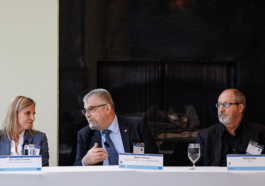
We had 20+ people get together at the Tower Club in Tysons Corner this morning for a discussion about Web 2.0 for business and govenment.  The context was in planning for the New New Internet conference scheduled for November 1st in Reston, VA.

The talk was really interesting.  There were a number of good ideas kicked around regarding speakers and panel topics.  There is clearly more to cover than we could possibly account for in one day, but one thing is for sure: the conference will be of great interest to a number of business people in the Washington region and beyond.

Keep and eye on the conference web site for updates on speakers, sponsors, and more.